 CAM · LONDON
- Time zone
- UTC+0 / +1
- Rush hours local
- 07–10 · 16–19
- Round
- ≈55 s
London Traffic Betting: Feed Behaviour and Peak Windows
The London feed is one of the live cameras behind Rush Hour. This page covers what the camera shows, when local traffic peaks, and how that lines up with your own time zone — so you know whether the feed is busy or empty before you open it. London's signature is slow, continuous traffic: fewer bursts, more of a steady stream, and a clock that sits between the Asian and the continental feeds.
18+ · ≈55 s rounds, up to ~65 an hour · operator margin applies · availability differs by country

The London feed itself
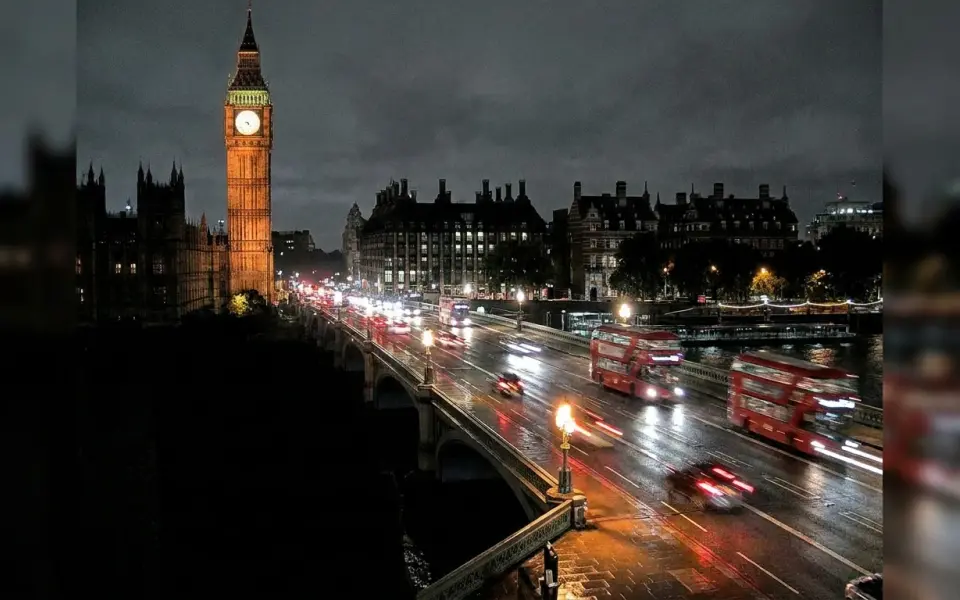
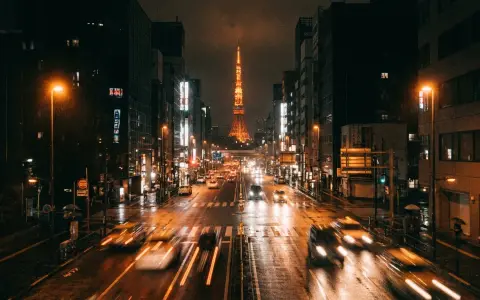
A fixed, elevated camera over a stretch of London road, with a detection zone across the lanes. The location is not published; the character of the traffic is unmistakable.
The game lists London as a feed and leaves it there. The junction is whatever is on your screen; we describe the view and do not guess an address. What you get is the standard Rush Hour set-up — a static angle, a marked detection zone, a computer-vision model registering each object that crosses it during a ≈55-second window, and a settled count that pays Under, Over, Range and Exact at once, around 65 rounds an hour.
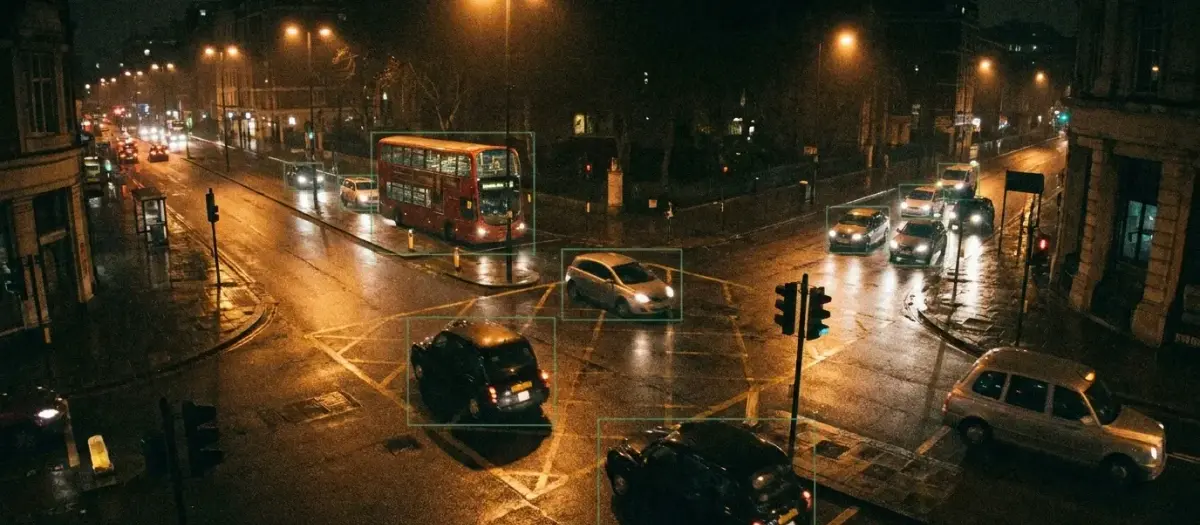
The London picture is easy to recognise even without landmarks because of the vehicle mix: red double-decker buses on most main roads, black cabs, a high proportion of vans, and — in the peaks — a stream of cyclists and delivery mopeds. Traffic moves slowly. Central London's average speed is famously low, in the region of 10 mph on the busiest roads, and a lot of the city's main streets have dedicated bus lanes, which means one lane in the frame can be moving while the others are queued. Where the zone sits relative to a bus lane is worth a look in the overlay.
General mechanics of zones and angles: how the count works on a traffic camera.
A fast, bursty feed
- Traffic arrives in waves released by an upstream signal.
- Long gaps between waves; a 55-second window can fall in a gap.
- Counts scatter widely from round to round.
- Exact is very hard to land.
London, typically
- Slow, continuous flow — queues creep rather than surge.
- Bus lanes keep one lane moving while others stand.
- Counts cluster more tightly around the line, at least in daytime.
- Same margin, same four markets, a different shape of variance.
How London's traffic moves through a day
Well-known facts about the city, not a measurement of this camera. London's peaks are long, its daytime is busy, and its nights are quieter than its reputation.
Night buses, taxis and deliveries. Main roads are at their emptiest; side roads are dead. Counts are low and erratic.
Long and congested. Buses and vans dominate the road while most commuters are underground; cycling peaks sharply around 08:00–09:00.
London does not empty between peaks. Deliveries, taxis, buses and tourists keep central roads close to capacity; the weekday congestion charge applies through these hours.
Slightly broader than the morning and slower to clear. Friday evenings start earlier and thin out earlier.
Saturday shopping and leisure traffic from late morning; Sunday is lighter and starts later. Bank holidays behave like Sundays.
Two things about London feed behaviour follow directly from the city. First, because flow is slow and continuous rather than released in bursts, a ≈55-second window on a daytime London camera is less likely to catch either an empty road or a flood. The signal cycle still matters — London junctions are signal-controlled and many run adaptive timing — but the queues it releases are moving at walking pace, so the count arrives as a steady trickle rather than a surge. The general mechanics are on how the signal cycle shapes the count.
Second, London's daytime is genuinely busy: central roads stay near capacity all working day, so the “daytime” band on the grid below is not a synonym for “low count”. Where London does go quiet is at night — after about 23:00 on a weekday the main roads thin out fast and stay that way until the first buses.

Time zone: when this feed is busy
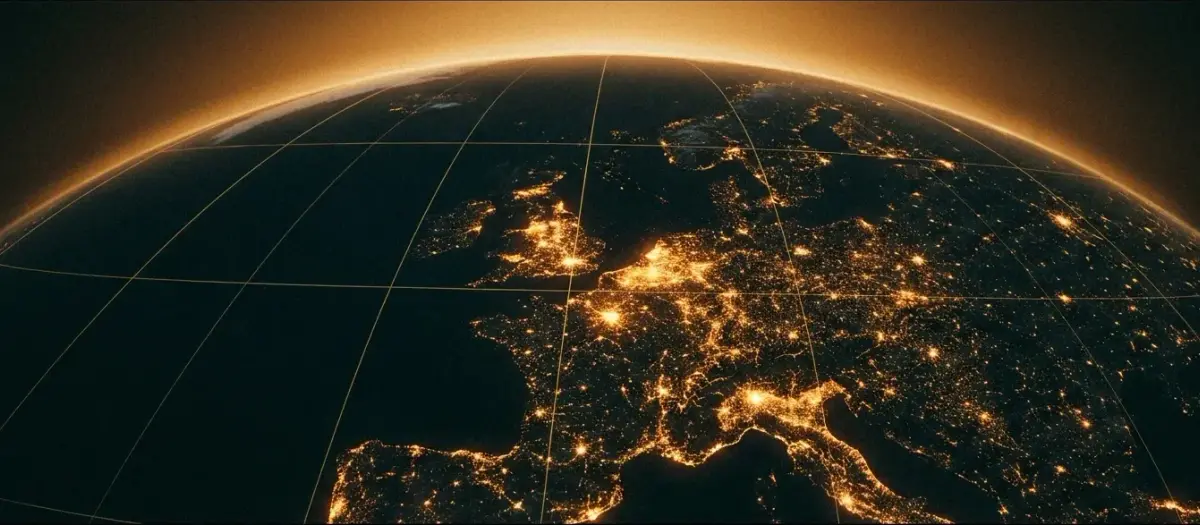
London is UTC+0 in winter (GMT) and UTC+1 in summer (BST) — one hour behind Paris all year, and the feed that is closest to “UTC” in the lineup.
Rush-hour bands (07–10, 16–19 local, Mon–Fri) are the typical big-city pattern, not a measurement of the feed. Hover or tap a cell to read it.
- Morning rush · London
- 07:00–10:00local, Mon–Fri
- = UTC
- 06:00–09:00BST; 07:00–10:00 in winter (GMT)
- = Central Europe
- 08:00–11:00all year — London and Paris shift together
- = US Eastern
- 02:00–05:00EDT; can differ by an hour for a few weeks in spring and autumn
- Evening rush · London
- 16:00–19:00local, Mon–Fri
- = UTC
- 15:00–18:00BST; 16:00–19:00 in winter (GMT)
- = Central Europe
- 17:00–20:00all year
- = US Eastern
- 11:00–14:00EDT; shifts by an hour in winter for both sides
London is the easy conversion for a European: it is always one hour behind Central Europe, because both sides change their clocks on the same weekend. For anyone in the Americas it is the feed that fills the early morning and lunchtime — London's evening rush lands at 11:00–14:00 US Eastern, the latest European peak you can watch before the continent goes quiet. For Asia and Australia, London's peaks are late evening and the small hours.
Within the European trio London is the last camera to go quiet and the last to wake up, an hour after Paris. The Paris feed is next on the ring; going east, Tokyo is nine hours ahead of GMT and in its morning rush while London sleeps.
What gets counted on the London feed
What the model treats as a vehicle depends on how detection is configured for this camera — and London's mix has more edge cases than most.
The baseline
Private cars, black cabs and a very high proportion of light vans. These are what any detection zone is built to register, one count each.
Big, frequent, one count
London's buses are large and constant. In most configurations a double-decker is a single object; whether this feed treats them differently — or whether a bus lane is even inside the zone — is something to check in the game.
To verify in game
Cyclists and delivery mopeds are a visible part of peak-hour London. Whether they register is a configuration setting that 155.io does not publish per feed.
The practical issue on London is lanes, not species. A frame with a bus lane, a general lane and a cycle lane has three different flows at the same moment, and the count depends on which of them the zone covers — visible in the overlay, and the first thing worth looking at. Neither is “better”; they simply produce different lines.
Typical counts and spread on London
Not published. What a viewer can say is that London's daytime counts look tighter than a bursty feed's — and that tighter is not the same as easier.
155.io publishes no average count, line or variance for the London camera, and we have not logged enough rounds to quote one. Qualitatively, slow continuous traffic means a daytime round is less likely to produce an outlier, so counts tend to cluster closer to the line than on a feed that lives on green releases. At night that reverses: a few vehicles, sometimes none.
A tighter cluster is tempting for Range and Exact — and the operator sets the Range band and the Exact payout from the same feed, with the same margin inside the published return of 90.00–92.16%. Read how the four markets settle; the hub at bet on traffic covers why no feed is a better bet than another.
- Typical count
- Not publishedno per-feed statistics from 155.io
- Spread (daytime)
- Tighterqualitative: slow, continuous flow
- Window
- ≈55 sabout 65 rounds an hour
- Fairness
- SHA-256hash committed before bets close, verifier by round ID
Other feeds
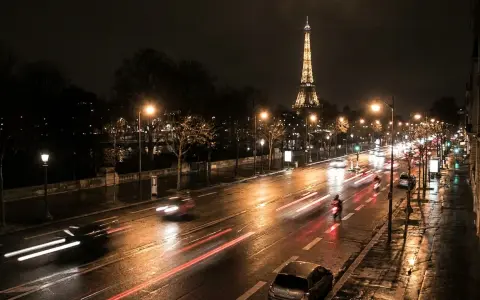
Paris is one hour ahead and the next camera on the ring; Tokyo is nine ahead and takes over when Europe goes dark.
 CAM · PARIS
 CAM · TOKYO
All seven cities with live clocks are on the home page. Operator availability, with check dates, is on where the game is available.
London traffic betting — FAQ
Where exactly is the London camera?
The game lists London as a feed; the precise junction is what you see on screen. 155.io does not publish camera locations, so we describe the view — a fixed, elevated angle over a multi-lane road with bus traffic — and do not guess a street.
When is the London feed busiest?
London's weekday peaks are roughly 07:00–10:00 and 16:00–19:00 local time — 06:00–09:00 and 15:00–18:00 UTC during British Summer Time, one hour later in winter. The table above converts them into your own time zone. Those bands are the city's usual pattern, not a measurement of this camera.
Does the London feed count motorbikes?
Detection settings vary by feed, so check what the game states for this camera before assuming. London has a noticeable share of motorbikes, delivery mopeds and, in the peaks, bicycles; whether any of them register on this feed is not published.
Is London better to bet on than other feeds?
No. London's traffic is slow and steady rather than fast and bursty, which changes the shape of the counts, not their value. The line is set from the same feed, so a busier or smoother camera simply gets a line that matches; the margin is identical on every city.
18+Play it like a 55-second game
A round ends, the next one opens, and an hour can hold around 65 of them. That frequency — not the camera, not the markets — is what makes this format easy to overspend on. Set a deposit limit and a time limit before you open the game, treat every stake as money spent, and stop when either limit is reached.
- 18+ only. The game is not available in every country; do not try to get around an operator’s restrictions.
- No strategy beats the line. Real traffic owes you no pattern, and the margin applies to every round.
- If it stops being fun, use the operator’s self-exclusion tools — our responsible gambling page lists where to get help.