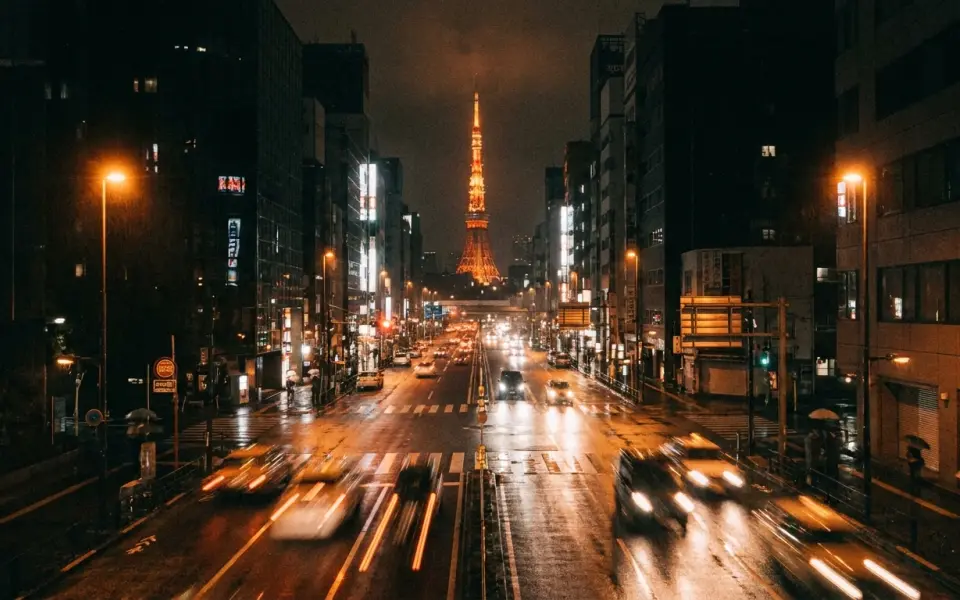
 CAM · TOKYO
- Time zone
- UTC+9
- Rush hours local
- 07–10 · 16–19
- Round
- ≈55 s
Tokyo Traffic Betting: Reading the Densest Feed in the Lineup
The Tokyo feed is one of the live cameras behind Rush Hour. This page covers what the camera shows, when local traffic peaks, and how that lines up with your own time zone — so you know whether the feed is busy or empty before you open it. Tokyo is the lineup's high-volume camera and, for Europe, a daytime feed that runs through the European night.
18+ · ≈55 s rounds, up to ~65 an hour · operator margin applies · availability differs by country

The Tokyo feed itself
A fixed camera, the same angle every round, pointed at a stretch of multi-lane road in the world's largest metropolitan area. What it counts is whatever crosses the detection zone drawn on those lanes.
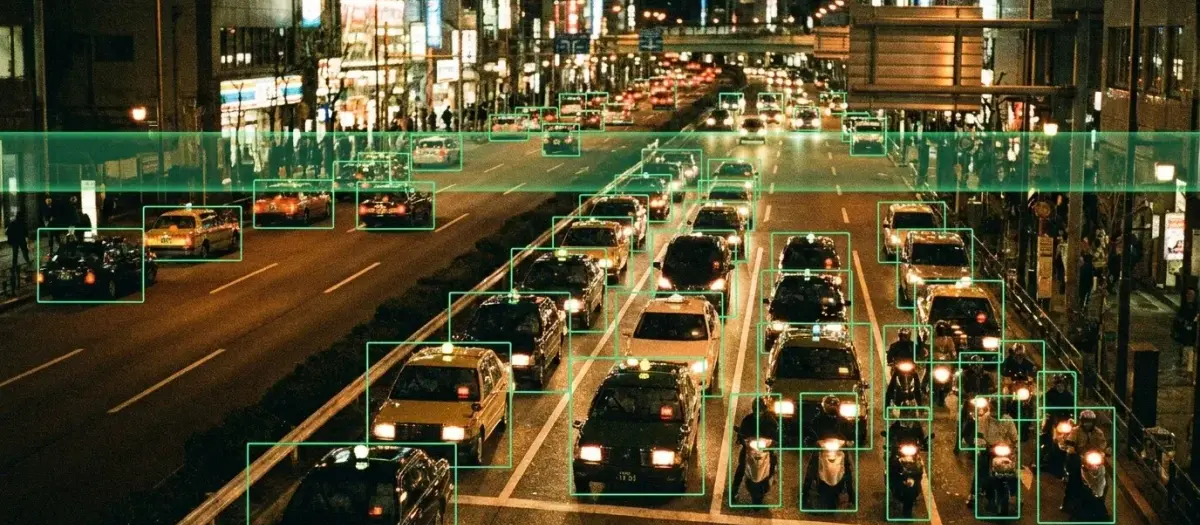
Rush Hour does not publish where its cameras are mounted, and neither do we. The game lists Tokyo as a feed; the exact junction is what you see on screen when you open it. What we can describe honestly is the kind of view it is: an elevated, static shot across several lanes, with a marked detection zone laid over the carriageway. Each vehicle the computer-vision model registers crossing that zone adds one to the round's count, and the round lasts ≈55 seconds, about 65 times an hour.
Two things make the Tokyo picture recognisable even without a place name. The first is density: Tokyo's road network carries commuter, freight and taxi traffic through the same junctions at once, so a wide camera here rarely shows an empty frame during the day. The second is the two-wheeler layer — scooters and motorbikes threading between stopped cars at a red light, then pulling away first when it turns green. Whether that layer is inside the count is the question for this feed, and we come back to it in what gets counted.
General mechanics of zones, angles and missed detections: how the count works on a traffic camera.
What the game tells you
- The feed is labelled Tokyo.
- A detection zone is drawn over the lanes you are watching.
- The line for Under and Over, the Range band and the Exact number for the round.
- The SHA-256 hash of the result, published before bets close.
What you see on screen
- A fixed, elevated angle — the camera does not pan or zoom between rounds.
- Several lanes; which direction(s) fall inside the zone is visible in the overlay.
- Traffic arriving in waves as an upstream signal releases it.
- The live count climbing during the amber phase, then the settled number.
How Tokyo's traffic moves through a day
General, well-documented facts about the city — not a measurement of this camera. They tell you when a Tokyo road is likely to be full, which is the only part of the count you can know in advance.
Tokyo's trains stop around midnight and restart around 05:00, so the small hours belong to taxis, night buses and freight. Roads are at their emptiest, and a camera count is at its lowest and most erratic.
The commute is overwhelmingly by rail, yet roads still fill: delivery vans, buses, taxis and the minority who drive. Counts climb fast and stay high.
Tokyo rarely has a real lull. Commercial traffic keeps the lanes moving, and a multi-lane camera usually shows a consistent, moderate flow.
Longer and flatter than the morning; it tails off gradually rather than stopping. Friday evenings run later.
Saturday and Sunday shift traffic toward late morning and afternoon. Golden Week (late April–early May), Obon (mid-August) and New Year empty the city noticeably.
Tokyo drives on the left, and its big junctions run long signal cycles — a full red-to-green loop at a major intersection can be well over a minute, which is longer than a Rush Hour round. That matters: a ≈55-second window can sit entirely inside one red phase and register almost nothing, or catch a whole green release and register a burst. The line is set knowing this, but the spread between rounds is what you feel. The mechanics are on how the signal cycle shapes the count.
Because most commuters are on rail, the morning road peak is sharp but not as extreme as the population suggests, and the evening is spread out. None of that predicts a count — it tells you which hours produce a high line and which a low one.

Time zone: when this feed is busy
Tokyo is UTC+9 with no daylight saving. For most of Europe and the Americas, that makes it a night feed — Tokyo's morning rush happens while the continent is asleep.
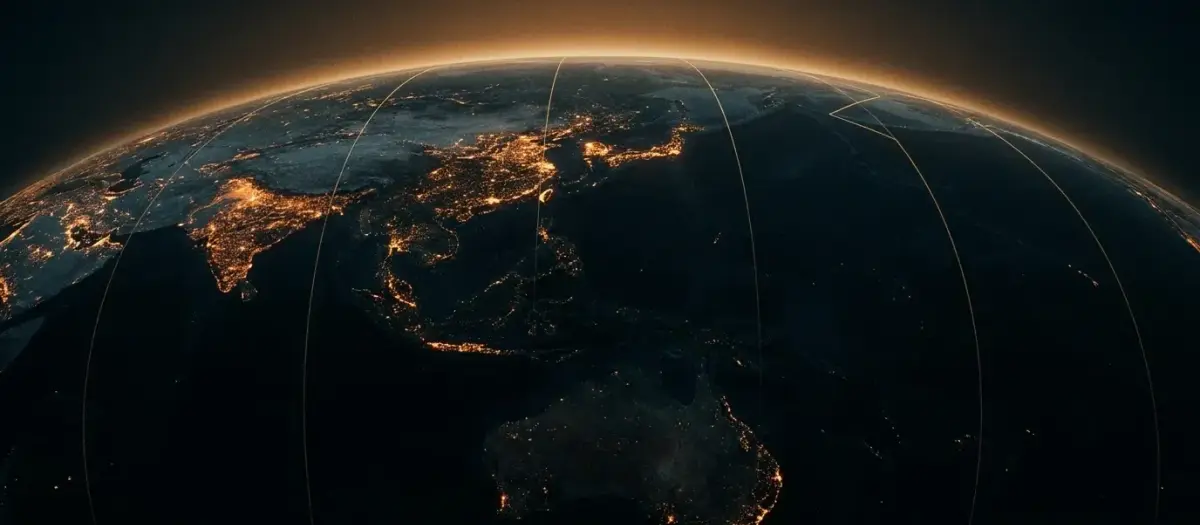
Rush-hour bands (07–10, 16–19 local, Mon–Fri) are the typical big-city pattern, not a measurement of the feed. Hover or tap a cell to read it.
- Morning rush · Tokyo
- 07:00–10:00local, Mon–Fri
- = UTC
- 22:00–01:00previous day to midnight
- = Central Europe
- 00:00–03:00CEST; 23:00–02:00 in winter
- = US Eastern
- 18:00–21:00EDT, previous day; 17:00–20:00 in winter
- Evening rush · Tokyo
- 16:00–19:00local, Mon–Fri
- = UTC
- 07:00–10:00same day
- = Central Europe
- 09:00–12:00CEST; 08:00–11:00 in winter
- = US Eastern
- 03:00–06:00EDT; 02:00–05:00 in winter
Read the grid first: your local hour on top, the Tokyo hour underneath, coloured by the usual weekday pattern. The cards give the two peak windows as fixed conversions. Tokyo itself never changes its clock, so the shift you see between summer and winter comes entirely from your side — Europe and North America move by an hour in spring and autumn, Tokyo does not.
For a European: Tokyo's evening rush is your late morning, its morning rush is your midnight, and while Europe's feeds are in their afternoon Tokyo is heading into its quiet night. For the Americas, Tokyo's morning peak lands in your evening. The Sydney feed runs one hour ahead of Tokyo and covers the same European night.
What gets counted on the Tokyo feed
The count is made by a computer-vision model, and what it treats as a vehicle depends on how detection is configured for that camera. For Tokyo the open question is two wheels.
The baseline
Passenger cars, the city's ubiquitous taxis and light commercial vans are the bulk of what any Tokyo camera sees. These are what the detection zone is built to register.
To verify in game
Japan has a visible share of two-wheelers, and in Tokyo they filter to the front at red lights. Whether the model counts them here is not published by the studio — check what the game states for this feed.
One each, probably
A bus or a lorry crossing the zone is one object like any other in most configurations; it does not count for more. The configuration for Tokyo specifically is not published.
A camera that counts scooters and one that ignores them can sit over the same lanes and produce very different numbers in a green release, so part of any Tokyo-versus-Europe gap may be configuration rather than traffic. Whatever the rule is, the line is set from the resulting numbers — it is already in the price.
Typical counts and spread on Tokyo
Short answer: not published. Here is what you can observe yourself, and why Tokyo tends toward a wide spread rather than a predictable one.
155.io publishes no typical count, average line or variance for any feed, and we have not logged enough rounds to quote one. So: a method instead of a number. Watch two or three rounds, note the line and the settled count, and note whether the window caught a green release or a red phase. On a dense multi-lane camera the counts scatter, which is exactly why Exact pays the most and lands least here.
A high base count does not make Over the obvious side. A Tokyo evening gets a higher line than a Tokyo 3 a.m., both priced with the same margin inside the published return of 90.00–92.16%. Markets and lines are on how to bet on traffic; the hub at bet on traffic has the short version.
- Typical count
- Not publishedno per-feed statistics from 155.io
- Spread
- Widequalitative: multi-lane, long signal cycles
- Window
- ≈55 sabout 65 rounds an hour
- Fairness
- SHA-256hash committed before bets close
Other feeds
When Tokyo goes quiet, the clocks below tell you who is busy. Sydney runs one hour ahead; London is nine behind.
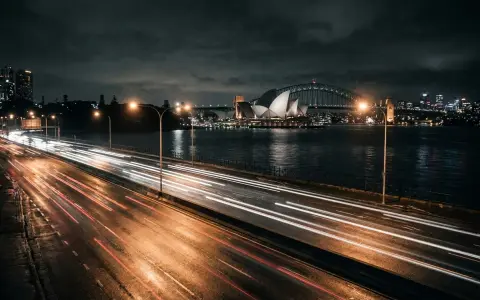 CAM · SYDNEY
 CAM · LONDON
All seven cities and their live clocks are on the home page. Availability by operator is on where the game is available.
Tokyo traffic betting — FAQ
Where exactly is the Tokyo camera?
The game lists Tokyo as a feed; the precise junction is what you see on screen. We describe the view — a fixed, elevated angle over several lanes — rather than guessing an address, because 155.io does not publish camera locations and nobody outside the studio can confirm one.
When is the Tokyo feed busiest?
Tokyo's weekday peaks run roughly 07:00–10:00 and 16:00–19:00 local time, which is 22:00–01:00 and 07:00–10:00 UTC. The table above converts them into your own clock. Those bands are the city's usual pattern, not a measurement of this particular camera.
Does the Tokyo feed count motorbikes?
Detection settings vary by feed, and Tokyo is the city where it matters most, because scooters and motorbikes filter between cars at every red light. Check what the game states for this camera before assuming they are in the count — we have not seen a published figure and do not invent one.
Is Tokyo better to bet on than other feeds?
No. Tokyo tends to carry high counts, but the line is set from the same feed, so a busy camera simply gets a higher line. Busier means bigger numbers and a wider spread, not better value; the operator margin is the same on every city.
18+Play it like a 55-second game
A round ends, the next one opens, and an hour can hold around 65 of them. That frequency — not the camera, not the markets — is what makes this format easy to overspend on. Set a deposit limit and a time limit before you open the game, treat every stake as money spent, and stop when either limit is reached.
- 18+ only. The game is not available in every country; do not try to get around an operator’s restrictions.
- No strategy beats the line. Real traffic owes you no pattern, and the margin applies to every round.
- If it stops being fun, use the operator’s self-exclusion tools — our responsible gambling page lists where to get help.